

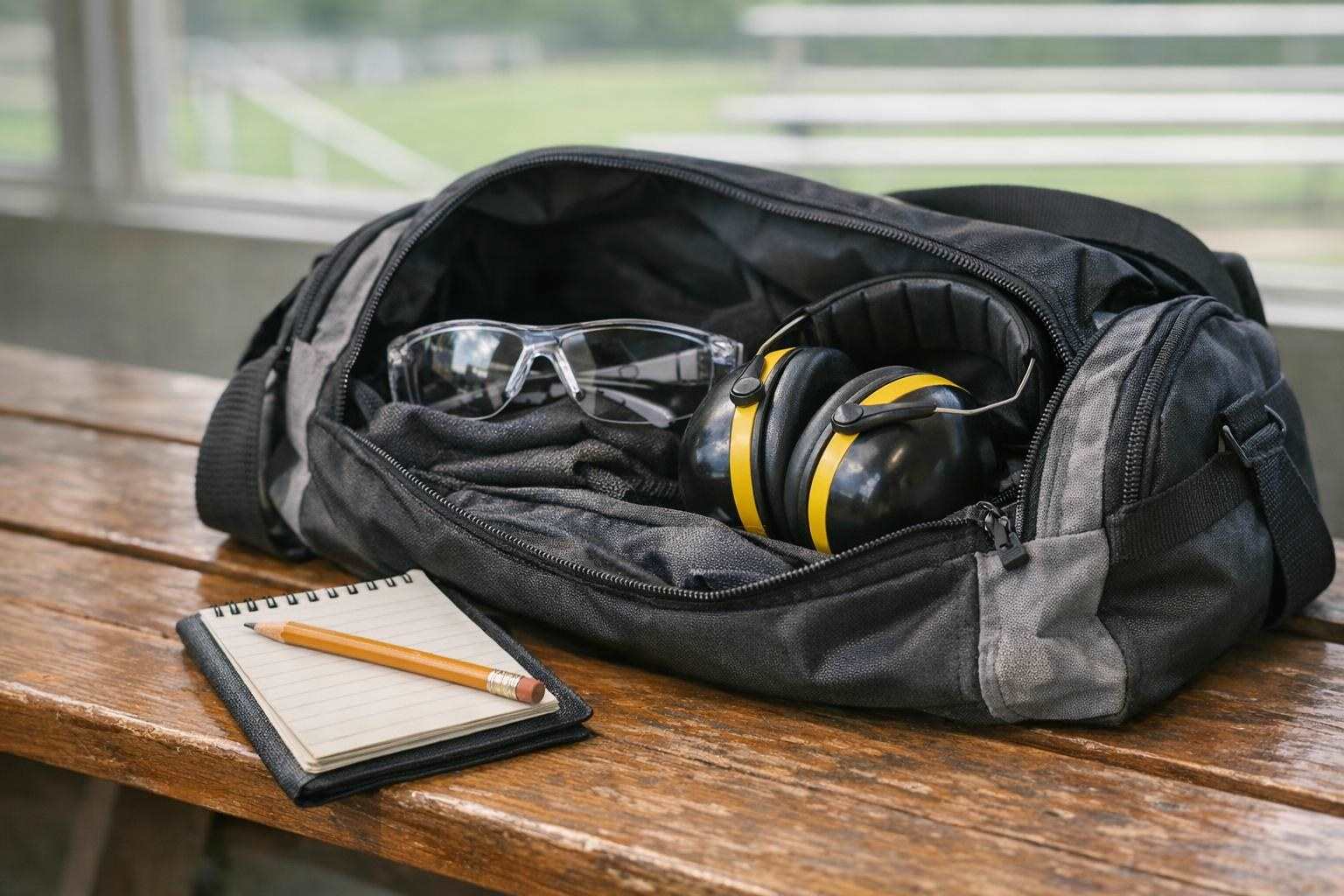
Evaluate a Short-Range Visit! Develop a short-range visit with one central purpose. Instead of doing a number of drills and then wondering what happened, focus on one skill that is relevant to your current shooting and ask a few questions. The coach can then observe a repeatable situation instead of trying to make sense of a bunch of different shooting attempts. This type of visit also enables you to start thinking about the maintenance and prevention of equipment related problems early on and address them before you continue shooting.
Start with a skill you can describe clearly
You could say: A useful goal has to be so specific that you can observe it easily. 'Get better' is way too wide for one gun club range day. 'My first shot after a pause has to become more consistent' is much more useful. A stable gun position, a smoother trigger press, a better sight picture or even the shot following safely with due attention to everything around you all make for good goals for short shooting sessions.
Focus on what you observe in your shooting! Are you getting better when you shoot slowly? Are you less consistent towards the end of your session? How does your technique look to you when you are shooting, as opposed to when you are pretending to be a shooting athlete?
Be able to recognize progress. And keep the target narrow enough for that. Shot focus training is not about completing as much work as possible. It's about gathering more clear information.
Turn observations into a compact practice plan
Better still make a note of what you wish the coach to look at before you arrive and outline what would make a good session for you. This will give the coach a good starting point from and enable him or her to provide you with better feedback and more relevant information to help your development.
Keep the equipment for practice focused to the activity at hand. Avoid taking too much equipment to the range, for fear of having to change things mid-practice. Additionally, if practicing different gun/s or setup/s, consider whether comparing them will be of any real use. Most consistency-based practice produces the cleanest results.
Remember to make room for questions in your schedule as a coach may wish to stop you to observe your technique, or alter something you're doing slightly to understand your thought process. Don't feel that you have to cram as much in as possible, every minute of your time at the shooting ground is valuable, but so is quality training.
Make the pre-session safety check routine
So, first up, follow the range's posted procedures and the instructions of the range staff before any shooting starts. Ensure all your equipment is in safe working order prior to use, and that you handle all the gear in a deliberate and controlled manner at all times.
Check a firearm for any signs of obvious damage. Look for loose or missing parts, excessive wear and tear, or anything else that appears unusual. Also, ensure that your eye and ear protection is in good working order. Also, verify that you have the necessary supplies for the activity and that none of them will cause you to be distracted from safe shooting supervision. Be sure to perform a fresh inspection of a firearm that has been stored, transported, or cleaned prior to shooting.
Do not attempt to 'fix' a previously unknown problem by making do with a makeshift solution or by forcing a part. Where there is unexpected damage, repeated failure, increased resistance, visible bulging, unusual sounds or any other unknown occurrences cease fire and treat the firearm as if it were unsafe. Safely point the muzzle of the firearm down range and retrieve the firearm in accordance with the range's safety procedures. Consider seeking the opinion of a qualified person (or the manufacturer's technical department) to confirm the safest course of action in resolving the issue. Problems and procedures can change over time and must be referred to in current Issues of official publication and the manufacturer's technical literature.
Give your coach useful information, not a performance
A shooting coach is able to give you the best feedback when you practice with your own style in shooting. Of course you don't have to show the coach all your shots, but especially the ones where things didn't work as you wanted, can be very helpful for the coach to see. Describe how you felt, but make a clear distinction between how something feels and your conclusion about it.
Ask your coach to watch a couple of things – ie. the change in your pace, the transition etc. Before you start ask the coach what a correct shot looks like, what are the early signs of fatigue, and at what point do you pull the trigger and stop rather than risking a poor shot.
Pause for clarification – it shows that you want to learn. Work under the coach's instructions. If the coach gives you feedback on your technique, make sure you apply the feedback correctly. Work under the changed parameters for a few repetitions and then stop to discuss in more detail. You are looking for consistent shooting.
Know which symptoms should end the session
A change in timing, an un-stable shooting position or an oscillation in concentration are all signals which require rest, a reduction in pace or a discussion with your coach to reconsider the focus of your practice.
On the other hand there are some shooting errors which should not be normalized and therefore should immediately be stopped and dealt with in an appropriate manner. These errors are unexpected damage to a firearm, unknown sounds or sensations, unexplained malfunctioning of parts, unexplained loose parts and others that indicate that the equipment is not functioning safely as expected. Returning to normal after one or two repeat shots is not good enough to normalize unexpected errors as these could indicate serious underlying problems.
Finally, recognize when fatigue has set in, such as having difficulty paying attention, hearing not being as it should be, failing to see what you would normally see, or simply being disturbed emotionally. End the session and go for a shorter session another day.
Leave with one next step
Before you leave, ask your coach for the one thing you should practice next, and for one indicator that you should stop practicing that skill. Record the equipment and the skill(s) you practiced, and what raised any equipment concerns. That way you'll have all the relevant information with you when you go back to the range for your next visit.
Next time go back to that skill or even test the skill under slightly different circumstances. These shoots can become part of your shooting practice plan and help strengthen the culture at the range where people turn up prepared to shoot, communicate effectively with other shooters and range staff, adhere to all range safety procedures and practice shooting in a safe and responsible manner to help prevent accidents from happening in the first place.